
What are people’s experiences of patient transport services?
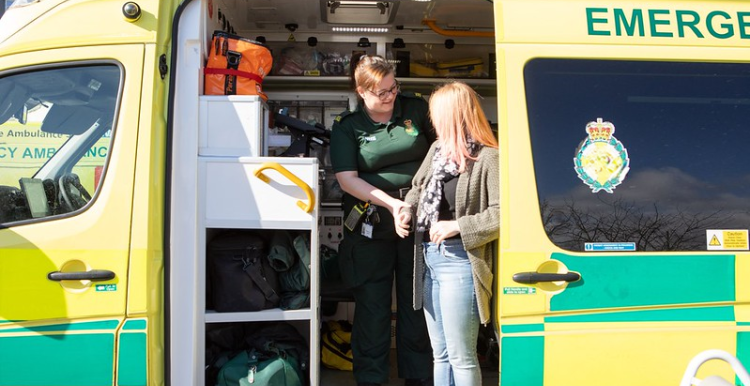
Access to services, including long waiting lists for specialist care and difficulty booking GP appointments, are examples of the challenges that some people face with getting the care they need.
However, for those with mobility issues and other health needs, getting to healthcare appointments can be challenging. People in these situations often require extra support in the form of patient transportation services.
Last November, Healthwatch England looked at the five key travel issues facing patients. This November, Healthwatch England are further exploring people’s experiences of using patient transport services, including what’s working well and what needs to improve.
Eligibility for patient transport services
The general eligibility criteria for patient transport services are:
- being referred for hospital care or being discharged
- having a medical need for transport, a cognitive or sensory impairment requiring oversight, going to or returning from dialysis, safeguarding, wider mobility or medical needs, and;
- and there is no other suitable transport.
Local Integrated Care Boards (ICBs) have some discretion to add other criteria, such as long distances to travel or high transportation costs, and limited or complex public transport options.
People shared with Healthwatch England that they felt the way in which eligibility rules were applied could be unfair, including being told they didn’t meet the eligibility criteria if they could walk a few yards or get in and out of a car. People were expected to get public transport, which was often non-existent particularly at weekends or early in the morning.
If a patient needs the skills and support of an escort, they cannot be left alone or their condition means they need someone with them, they can have a carer travel with them. Healthwatch England also heard about people who needed a carer to come with them not being able to be accommodated on patient transport.
Difficulties booking patient transport
People shared the difficulties that they have experienced with phoning or using online systems to book transport and having to book several weeks in advance. This makes it impossible to get patient transport to urgent appointments.
Others noted that transport wasn’t available to take people to hospital for 7am for a procedure, at weekends or in the evenings, making it difficult for patients to get there by other means.
Another key issue is that people are often not told at all or told at the last minute that their transport has been cancelled, resulting in them having to book a taxi at great expense or even miss their appointment.
What's Healthwatch done to improve patient transport?
In October 2019, Healthwatch England published ‘There and back -what people tell us about their experiences of travelling to and from NHS services’. The report looked at all aspects of travel to healthcare, including non-emergency patient transport.
At the time, the key issues people reported were how eligibility criteria were being interpreted locally, leading to some people with high needs being told they weren’t eligible, and poor experiences such as needing to be picked up a long time before their appointment and waiting for hours to be driven home.
At the 2019 Healthwatch National Conference, former NHS England Chief Executive Sir Simon Stevens announced a formal review of Non-Emergency Patient Transport Services (NEPTS). Healthwatch’s evidence fed into the review, resulting in a new national framework for patient transport, updated national eligibility criteria and improved use of technology to better coordinate appointments and communication to patients waiting for journeys.
After patchy implementation of the NEPTS review’s recommendations, NHS England wrote to ICBs in August 2024 urging them to deliver a universal transport offer to all dialysis patients. ICBs were asked to set-up working groups including local Healthwatch to improve implementation by March 2026.
Using patient transport
People have told Healthwatch England that they must be ready early to be picked up, at least one but usually two hours, before their appointment time. They may also have to wait a long time to be picked up after their appointment has finished.
One of the factors contributing to unnecessarily long journeys is that patient transport bookers often patient transport bookers are unfamiliar with the local area. They are also not always exclusive as they may pick up several people for efficiency reasons. Others have commented on the uncomfortable vehicles used by transport services.
Despite national policy changes, people continue to share poor experiences of NHS transport support. This includes issues with complicated booking systems, a lack of communication, unclear and confusing eligibility, poor experiences of NEPTS journeys, and no options for carers to join them on journeys. These barriers lead to an over-reliance on public transport, which can be inaccessible and too costly for some patients.
People who need help to get to NHS appointments should be able to get the support they need. This includes older people, disabled people, and those who require regular NHS appointments for life-sustaining treatment.
Healthwatch England are calling for:
- A five year stocktake of the NEPTS review. Healthwatch evidence informing the NEPTS review unfortunately shares too many similarities with people’s current experiences, particularly around unclear eligibility and a lack of support for carers joining people on their journeys. Before August 2026, there should be an evaluation of how the 2021 review has helped, with identification of any further support ICBs need to ensure people are supported to get to and from vital NHS appointments.
- An overhaul of NEPTS booking systems. People must be given meaningful choice over how they book NEPTS travel. This includes in person, via telephone, or through digital channels including websites and the NHS App. All booking methods must ensure travel support is available for out-of-hours appointments.
- A formal review of the NHS Low Income Scheme. The Low-Income Scheme has not been reviewed for over twenty years. Support should be expanded to provide pre-paid transport support through the Health Travel Cost Scheme (HTCS). In line with the government’s shift to neighbourhood care, the HTCS should be extended to non-hospital appointments, such as GP, pharmacy, dental or community diagnostic visits, and should be better accessible via the NHS App.
- Reductions in the cost of NHS car parking. There should be a national reduction in NHS parking fees, with fees waived altogether for unpaid carers, those on low-incomes, and people visiting hospitals regularly for treatment of a long-term condition for themselves or someone close to them. The Government and ICBs should also ensure NHS trusts are following existing car parking and Blue Badge guidance.
- Better support for people who travel further for quicker NHS care. When people exercise their patient choice to travel out of area for quicker treatment, their travel and hotel costs should be covered through national funding to ICBs.
- More care coordinators to proactively discuss patient travel needs. The Government’s 10-Year Workforce Plan should invest in trained admin staff to help with patient transport and other non-clinical support.
- Better implementation of hospital discharge guidance. Everyone discharged from hospital should have a conversation with staff about their travel arrangements to get home and nobody should be discharged at night unless transport support can be arranged. To support implementation, a minimum standard for transport waiting times following discharge should also be introduced.